Quick answer: The best first ear piercing for most men is a standard lobe piercing. It generally heals faster than cartilage, but pain varies. Allow several months rather than treating six weeks as a guaranteed healing deadline. For something edgier, try a helix (upper outer rim) or tragus piercing next. Cartilage piercings take around 6 to 12 months to heal fully. The Association of Professional Piercers recommends sterile saline wound wash without additives for routine aftercare.
Earrings on men aren’t a statement anymore. They’re just another accessory, like a watch or a ring. Whether you want one subtle stud or a fully planned-out ear, placement matters most. Pick a spot that suits your style, pain tolerance and lifestyle, then look after it while it heals.
Where each ear piercing goes and how long it heals
Pain is personal and healing depends on your body and aftercare, so treat these as typical ranges rather than promises.
| Piercing | Where it goes | What to expect | Typical healing time |
|---|---|---|---|
| Lobe | Soft lower earlobe | Pain varies by person and anatomy | About 3 months or longer |
| Upper / stacked lobe | Higher on the earlobe | Pain varies by person and anatomy | About 3 months or longer; longer if cartilage is involved |
| Helix | Upper outer rim of the ear | Pain varies by person and anatomy | 6 to 12 months |
| Forward helix | Front rim, just above the face | Pain varies by person and anatomy | 6 to 12 months |
| Tragus | Small flap in front of the ear canal | Pain varies by person and anatomy | 6 to 12 months |
| Anti-tragus | Ridge opposite the tragus, above the lobe | Pain varies by person and anatomy | 6 to 12 months |
| Conch | Cup-shaped centre of the ear | Pain varies by person and anatomy | 6 to 12 months |
| Rook | Inner ridge above the ear canal | Pain varies by person and anatomy | 6 to 12 months |
| Daith | Innermost fold above the ear canal | Pain varies by person and anatomy | 6 to 12 months |
| Industrial | Two holes across the top cartilage, joined by one bar | Pain varies by person and anatomy | 9 to 12+ months |
The Most Popular Ear Piercings for Men
1. Lobe Piercing
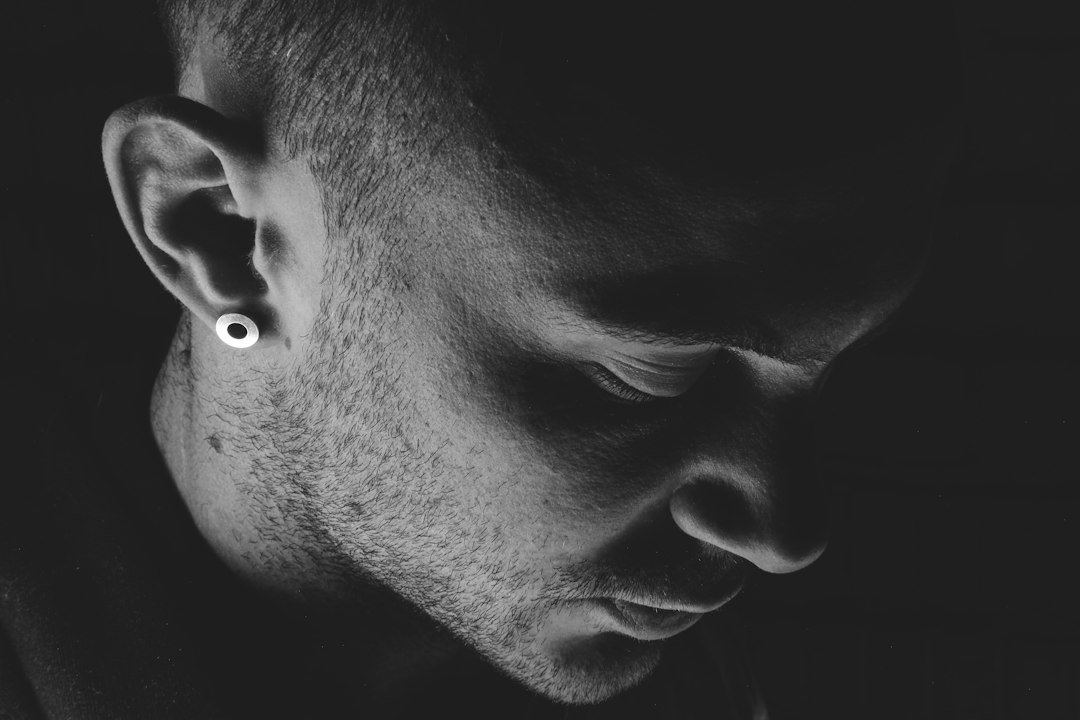
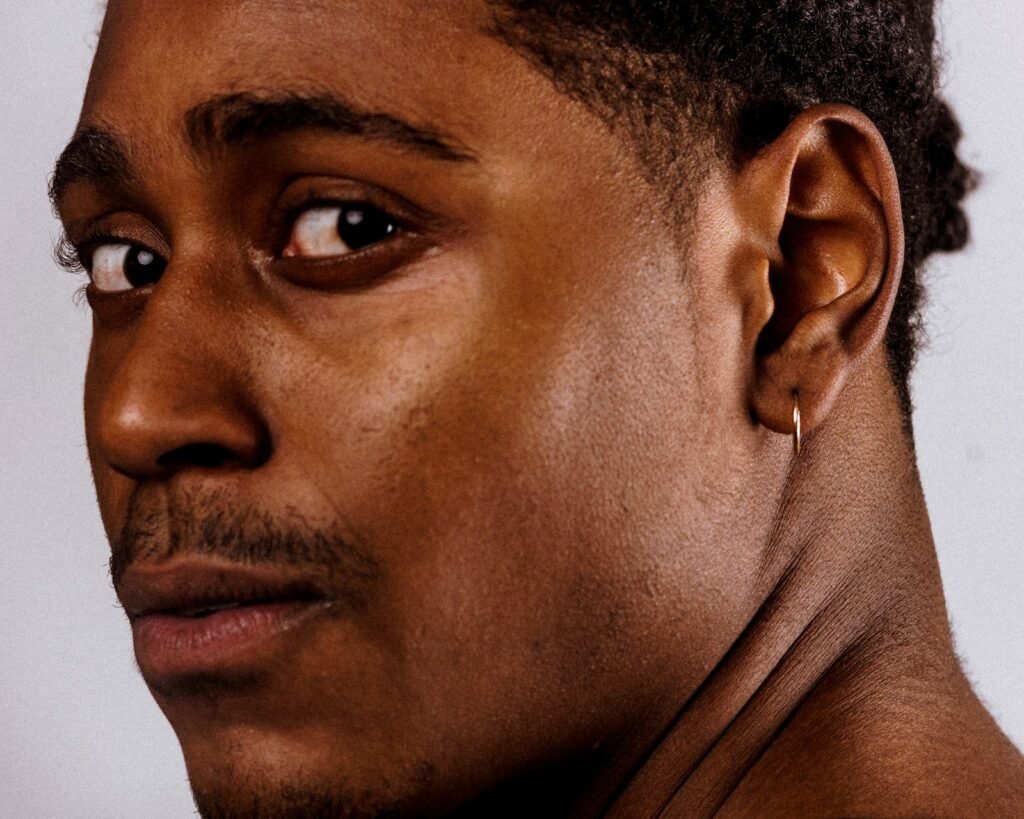
The lobe is the classic choice. A small stud or hoop in the earlobe suits almost every face shape and dress code. Keep the jewellery in while it heals. Even healed piercings can close quickly, so check workplace rules before booking. It’s the best place to start if you’ve never had a piercing.
Best jewellery: a small titanium or gold stud (3 to 5 mm) or, once healed, a simple huggie hoop.
2. Double or Stacked Lobe
A second hole above the first adds interest without much extra pain. Mixing a small stud above a hoop is a clean, modern look.
3. Helix Piercing

The helix sits on the upper outer rim of the ear. It is a visible option for a stud or, when appropriate, a ring. Pain and suitable jewellery depend on your anatomy and healing stage.
Good to know: avoid sleeping on it while it heals. A travel pillow lets you sleep on your side without pressure on the ear.
4. Tragus Piercing

The tragus is the small flap of cartilage that partly covers your ear canal. A tiny flat stud here looks subtle but stylish. If you wear in-ear headphones or earbuds a lot, a tragus piercing can be annoying while it heals.
5. Conch Piercing

A conch piercing goes through the cup-shaped centre of the ear. Depending on placement and anatomy, a conch can take a stud or, once healed, a suitably fitted ring. It’s thicker cartilage, so expect a bit more pressure and a long heal.
6. Daith Piercing

The daith goes through the innermost fold of cartilage above the ear canal, usually with a small curved ring. You may hear that daith piercings help migraines. There’s no good scientific evidence for that, so get one for the look, not as a treatment.
7. Rook Piercing

Rook piercings go through the ridge of cartilage in the upper inner ear. It’s a less common choice, so it feels distinctive. Not every ear has enough of a ridge for a rook. A good piercer will tell you honestly if yours does.
8. Anti-Tragus Piercing

The anti-tragus sits on the small ridge opposite the tragus, just above the earlobe. It’s one of the more sensitive spots, but it pairs nicely with lobe piercings.
9. Industrial Piercing

An industrial is two cartilage piercings, usually a forward helix and a helix, joined by one long barbell. This is the boldest and most demanding option here. It needs suitable anatomy, hurts more, and takes the longest to heal. Save it for when you’ve healed a single cartilage piercing before.
Upper ear piercing or lobe for your first one
Any piercing through the cartilage above your lobe counts as an upper ear piercing. The helix, rook, daith, conch and industrial all count. Most men start with a lobe, then add one upper piercing once it heals. Upper piercings suit small hoops and flat studs, but they take longer to settle.
- Lobe: soft tissue, the quickest to heal and the easiest to keep subtle.
- Upper lobe: a second hole above the first, good for a stacked look.
- Helix and flat: the most popular upper ear piercings for men.
- Tragus, conch and daith: inner ear spots that suit small studs and clickers.
How to Choose the Right Ear Piercing
- Your style: lobes look classic and work anywhere. Helix and tragus feel modern. Industrials and daiths read edgier.
- Workplace: if your workplace is conservative, lobes are the easiest to keep subtle with small studs.
- Lifestyle: contact sports, helmets, phones pressed to the ear and in-ear headphones can all irritate cartilage piercings.
- Healing time: cartilage takes months to heal because it has a much poorer blood supply than the earlobe.
- Ear shape: rooks, daiths and industrials depend on the shape of your ear.
Does it matter which ear? No, and the old idea that a piercing in one ear means something about your sexuality is an outdated stereotype. Pick whichever side you like, or both.
How to get pierced safely
- Choose a professional piercing studio that uses needles, not a piercing gun. Needles create a clean channel. Guns use blunt force, are harder to sterilise and are a bad idea for cartilage.
- Look for a clean studio with an autoclave (sterilising machine), single-use needles and a portfolio of healed work. Membership of the Association of Professional Piercers (APP) is a good sign.
- Ask about the metal. First jewellery should be implant-grade titanium (ASTM F136), niobium, or solid 14k or 18k gold that is nickel-free. Avoid plated jewellery. ‘Surgical steel’ alone is not a quality standard: certified grades such as ASTM F138 can be suitable. Discuss nickel sensitivity with your piercer.
- Expect longer starter jewellery. Your piercer will leave room for swelling and should invite you back after a few weeks to downsize the post.
Does Getting an Ear Piercing Hurt?
A lobe piercing feels like a quick, sharp pinch that’s over in a second. Cartilage piercings feel stronger, like pressure plus a sharp sting. Expect a dull ache or throbbing for a few days. Tenderness, mild swelling and some crusting are normal during the first weeks.
The aftercare professional piercers recommend
The APP’s current advice is simple: keep it clean, and otherwise leave it alone.
- Clean once or twice a day with sterile saline wound wash (0.9% sodium chloride). Spray it on, let it sit for a moment, then gently pat dry with clean gauze or paper towel. Don’t use contact lens solution.
- Don’t use alcohol, hydrogen peroxide, harsh soaps, tea tree oil or homemade salt-water mixes. They can dry and irritate healing tissue.
- Avoid twisting, turning or playing with the jewellery. It isn’t needed and it drags bacteria into the wound.
- Wash your hands before you touch the area for any reason.
- Keep pressure off it. Don’t sleep on new cartilage piercings, and clean your phone screen and pillowcase often.
- Avoid swimming in pools, lakes, the sea and hot tubs until it’s healed.
- Don’t change the jewellery early. Wait until it’s fully healed, and let your piercer do the first change.
Irritation or infection?
Irritation bumps, light redness and clear or whitish crust are common, especially with cartilage. They usually settle once you remove the cause, such as sleeping on it or snagging it. See a doctor if you notice spreading redness, heat, thick yellow or green pus, increasing pain or fever. Get prompt medical advice for suspected infection, especially in cartilage. Leave the jewellery in unless a doctor tells you to remove it.
How to Keep a Piercing Open Without Visible Jewellery
- Wear a clear or skin-tone retainer chosen and fitted by a qualified piercer once healed. Suitable glass may be an option; not every clear plastic is body-safe.
- Switch to a small flat-back titanium labret stud, which sits flush and barely shows.
- Avoid leaving a healing piercing empty, as even healed holes may close within minutes.
Pros and Cons of Ear Piercings for Men
| Pros | Cons |
|---|---|
| An easy way to add personality to your look | Cartilage piercings take many months to heal |
| Lobes are low-pain and low-commitment | Bumps and irritation are common if you sleep on them |
| Endless jewellery options to switch up later | Some workplaces still have jewellery rules |
| Works with casual and formal outfits | Infection risk if aftercare or the studio is poor |
Questions men ask about ear piercings
What is the best ear piercing for men?
A lobe is a common first choice and generally heals faster than cartilage. Allow several months and ask a qualified piercer to assess healing before changing jewellery.
Which ear piercing hurts the most?
Pain varies by person and placement. Cartilage may feel more intense than a lobe, and an industrial involves two punctures. A numerical ranking cannot predict your experience.
How long does a cartilage piercing take to heal?
Usually 6 to 12 months, and industrials can take a year or longer. It may look healed before then, so keep up gentle aftercare.
How should I clean a new ear piercing?
Spray it with sterile saline wound wash once or twice a day and pat dry. Avoid alcohol, peroxide, harsh soaps and homemade salt solutions.
What earrings should a man wear first?
A small implant-grade titanium or solid gold stud. Once fully healed, you can try small hoops, huggies or larger studs.
Can I get my ears pierced with a gun?
Professional piercers recommend a needle instead of a gun. Guns are harder to sterilise and can damage tissue, especially cartilage.
What is an upper ear piercing?
It is any piercing in the cartilage above the earlobe, such as a helix, rook or industrial. These usually take longer to heal than a lobe.
Start with a lobe and build from there
Start with a lobe, use a reputable needle piercer and quality titanium or gold jewellery, and follow simple saline aftercare. Once that’s healed, you can build up to helix, tragus or bolder placements. Want to pair your new piercing with other accessories? Read our guide to pearl necklaces for men.
This guide is for general information. Talk to a doctor before getting pierced if you have a medical condition, a history of keloids or healing concerns.